
Kitchen Wrapping Advice

How Much Does It Cost to Wrap a Kitchen in the UK?
Kitchen wrapping is a way to update the appearance of existing kitchen doors, drawer fronts and other suitable surfaces without replacing the entire kitchen. It can be worth considering if your cabinets are structurally sound but look dated.
What affects the cost of kitchen wrapping?
The cost of wrapping a kitchen depends on several factors:
- Number of doors and drawers: More surfaces generally mean more material and labour.
- Door style: Flat doors can be quicker to wrap than detailed shaker-style doors.
- Condition of the existing kitchen: Peeling finishes, damaged edges, grease or loose coatings may make the preparation more complicated. Some surfaces may not be suitable for wrapping.
- Choice of vinyl: Different colours, textures and finishes can have different material costs.
- Additional surfaces: End panels, exposed carcasses, plinths and worktops can increase the total price.
- Installation and travel: The location of the property and the complexity of the work can affect the quotation.
Is kitchen wrapping cheaper than a new kitchen?
Wrapping can cost less than a full kitchen replacement because it may allow you to retain your existing cabinets and layout. However, the saving depends on the condition of the kitchen, the surfaces being changed and the finish you want.
If your cabinets are damaged, swollen from moisture or poorly fitted, replacing them may be the more sensible option.
How can I get an accurate quote?
The best starting point is to count your doors and drawers and take clear photographs of the kitchen, including the door edges and any damaged areas. A professional installer can then assess suitability and provide a quotation based on the actual work required.
At Wraps by AJ, we help homeowners explore ways to refresh their kitchens with professionally applied vinyl finishes. Contact us to discuss your kitchen and the options available.

Is Kitchen Wrapping Worth It?
Kitchen wrapping can be an excellent way to change the look of a kitchen without committing to a complete renovation. Whether it is worth the money depends on the condition of your existing kitchen, your budget and what you want to achieve.
When is kitchen wrapping worth considering?
Wrapping is often worth investigating when:
-
Your cabinet doors are in good structural condition but look dated.
-
You want a different colour or finish without changing your kitchen layout.
-
Your existing cabinets and storage work well for your household.
-
You want to avoid the disruption associated with a full kitchen replacement.
-
You would like to refresh the appearance of your kitchen without replacing every component.
For example, older doors in a suitable condition may be transformed with a modern matt, cashmere, sage green or wood-effect finish.
When might kitchen wrapping not be worthwhile?
Wrapping is not suitable for every kitchen. Doors that are swollen, crumbling, badly delaminated or affected by moisture may not provide a reliable surface for the vinyl.
If the kitchen layout no longer works, the cabinets are failing or you need new appliances and plumbing, a larger renovation may provide better long-term value.
Does kitchen wrapping last?
The lifespan depends on the vinyl, preparation, installation quality, surface condition, heat exposure and everyday use. There is no single lifespan that can be guaranteed for every kitchen.
Good preparation and suitable surfaces are essential. Ask your installer about the specific material being used, its care instructions and any applicable warranty.
The verdict
Kitchen wrapping is worth considering when the underlying kitchen is sound and the main goal is to change its appearance. Compare a detailed wrapping quotation with the cost of the alternatives before making your decision.
If you are unsure whether your kitchen is suitable, have the existing doors and panels assessed before committing to the work.

How Long Does Kitchen Wrapping Last?
One of the most common questions homeowners ask before wrapping their kitchen is how long the new finish will last.
The honest answer is that it varies. The quality and suitability of the vinyl, preparation, application and conditions in the kitchen all influence the result.
What affects the lifespan of kitchen wrap?
1. Preparation
The surface must be assessed and prepared correctly. Grease, dust, loose coatings and damaged edges can prevent reliable adhesion.
2. Condition of the original doors
Vinyl does not repair a failing door. If the original coating is separating or the substrate is swollen, the wrap may not remain secure.
3. Heat and moisture
Areas close to ovens, kettles, dishwashers and other heat or steam sources may experience more demanding conditions. The material must be suitable for its intended application, and the manufacturer’s instructions should be followed.
4. Everyday use
Cupboard edges, handles and frequently touched areas experience repeated contact. Careful use and suitable cleaning can help protect the finish.
5. Installation quality
Accurate cutting, appropriate application techniques and careful finishing around edges and corners all matter.
How can I make kitchen wrap last longer?
-
Follow the vinyl manufacturer’s cleaning instructions.
-
Avoid abrasive scourers and harsh chemicals unless specifically approved.
-
Wipe away spills and moisture promptly.
-
Avoid excessive heat or direct contact with hot cookware.
-
Address lifting edges early rather than pulling at the vinyl.
Does kitchen wrapping come with a guarantee?
Warranty terms depend on the installer and the vinyl manufacturer. Ask what is covered, for how long and whether there are exclusions for heat, moisture, substrate failure or accidental damage.
Kitchen wrapping can provide a durable refreshed finish when the materials and installation are appropriate, but no installer should promise the same lifespan for every kitchen.

Kitchen Wrapping vs Replacing Kitchen Doors: Which Is Better?
If you like your kitchen layout but dislike the appearance of the doors, you may be deciding between wrapping the existing doors and replacing them.
Both options can improve the look of a kitchen, but they suit different circumstances.
What is kitchen wrapping?
Kitchen wrapping involves applying a specialist self-adhesive vinyl film to suitable existing surfaces. It can change the colour and appearance of doors, drawer fronts and selected panels without replacing those components.
The existing doors must be suitable for the material and installation method.
What is replacing kitchen doors?
Door replacement involves removing existing doors and installing new ones. It offers the opportunity to change the door design and, depending on the products chosen, the dimensions or construction.
The existing cabinet carcasses may be retained if they are in good condition and compatible with the new doors.
Which option costs less?
Wrapping can be the more economical option when the existing doors are sound and only their appearance needs changing. Replacement costs depend on the number of doors, chosen materials, fitting requirements and whether additional components need changing.
Neither option is automatically cheaper for every kitchen, so compare quotations covering the same scope of work.
Which option is best for damaged doors?
Wrapping is not a substitute for repairing structurally damaged doors. Swelling, loose coatings and moisture damage may make wrapping unsuitable.
Replacement is often the better route if the doors are deteriorating or you want a different door construction.
What about changing the kitchen layout?
Neither wrapping nor replacing doors alone will fundamentally change the layout. If you need new cupboards, improved storage or a different arrangement of appliances, a wider renovation may be appropriate.
Final thoughts
Choose wrapping if your existing doors are suitable and you want to change their appearance. Consider replacement if the doors are damaged or you want a different style or construction.
A professional assessment and comparable quotations will help you decide which approach offers the best value for your kitchen.
Can You Wrap Damaged or Peeling Kitchen Doors?
Not every kitchen door is suitable for wrapping. The most important factor is the condition of the existing surface, because vinyl needs a suitable substrate to adhere to reliably.
Can peeling kitchen doors be wrapped?
It depends on what is peeling.
If the existing decorative coating is separating from the door, applying vinyl over it may not solve the underlying problem. The new material could be affected if the old coating continues to lift.
A professional needs to assess whether the surface can be prepared adequately or whether the door should be replaced.
Can swollen kitchen doors be wrapped?
Swelling caused by moisture can affect the door’s shape and structural integrity. This is particularly relevant to some board-based cabinet doors.
If the door has expanded, softened or deteriorated, wrapping may not be a suitable long-term solution. Replacing the affected door may be more appropriate.
Can scratches and small imperfections be covered?
Minor cosmetic imperfections may be manageable in some situations, but the result depends on their depth, the surface and the vinyl being used. Vinyl does not automatically conceal every scratch, dent or uneven area.
Ask your installer whether any repair or preparation is required before wrapping.
What about damaged edges?
Edges are particularly important because they need to provide a suitable surface for the vinyl to finish securely. Broken corners, loose laminates and damaged edges should be inspected before work begins.
Should I wrap or replace my doors?
If the doors are structurally sound and the problems are cosmetic, wrapping may be worth considering. If the doors are swollen, crumbling or delaminating, replacement may be the safer investment.
At Wraps by AJ, the sensible first step is to assess the condition of the existing kitchen rather than assume every door can be wrapped.
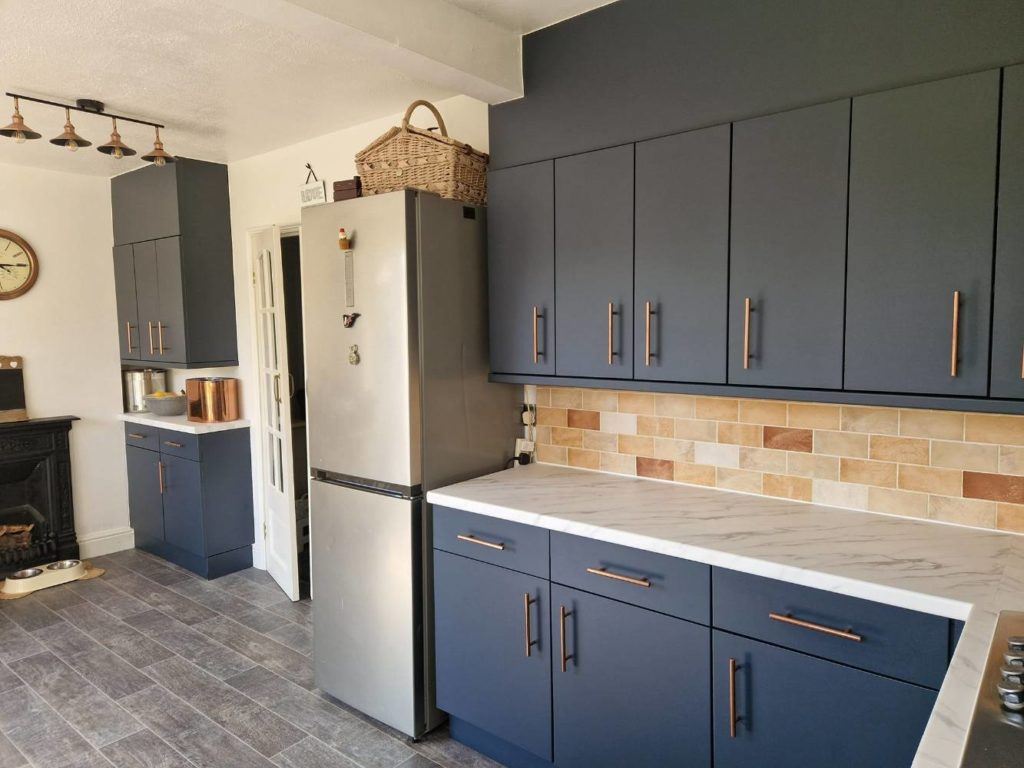
Is Kitchen Wrapping Waterproof and Heat-Resistant?
Kitchen vinyl is designed for particular applications, but that does not mean every vinyl film is waterproof or suitable for every source of heat.
Before wrapping a kitchen, it is important to understand the limits of the material and the conditions it will face.
Is kitchen wrapping waterproof?
Some vinyl films can tolerate normal cleaning and occasional splashes when correctly applied to suitable surfaces. However, this does not make the whole kitchen waterproof.
Water can enter through damaged edges, seams or areas where adhesion has failed. Prolonged moisture exposure can also damage the underlying cabinet material.
Wipe up spills promptly, follow the manufacturer’s cleaning instructions and pay particular attention to sinks, taps and other areas regularly exposed to water.
Can kitchen wrap withstand heat?
Heat tolerance depends on the specific vinyl and the application. Areas near ovens, hobs, kettles and other heat-producing appliances may experience temperatures or conditions beyond those recommended for a particular film.
Never assume that ordinary cabinet vinyl is suitable for direct contact with hot cookware or exposure to an open flame.
Can you wrap a kitchen worktop?
Some specialist films are designed for worktop applications, but not every cabinet vinyl is suitable. Worktops face greater abrasion, cutting, impact, heat and water exposure than most cupboard doors.
Ask for the product’s intended-use information before choosing a material for a worktop.
How can I protect a wrapped kitchen?
Use the recommended cleaning products, avoid abrasive tools, prevent prolonged water exposure and follow the material manufacturer’s guidance around heat sources.
Final advice
The best result comes from choosing a material designed for the surface and using it within its stated limits. Ask your installer which vinyl is being used and whether it is suitable for each area of your kitchen.
Can You Wrap Kitchen Worktops?
If your kitchen cupboards still look good but your worktops are dated, you may be wondering whether wrapping them is an alternative to replacement.
Specialist worktop films can change the appearance of some existing worktops, but suitability depends on the surface, the material and how the kitchen is used.
What worktop finishes are available?
Depending on the product range, options may include wood-effect, stone-effect, marble-inspired and plain-colour finishes. These can help create a different overall style without changing the kitchen layout.
The appearance and texture vary between products, so viewing samples in your own kitchen lighting can help you choose.
Are all worktops suitable for wrapping?
No. The existing worktop must be assessed for stability, surface condition, moisture damage and compatibility with the chosen film.
Swollen board, loose surfaces, damaged edges and areas with persistent water ingress can make wrapping unsuitable.
Can wrapped worktops handle heat and knives?
You should not assume a wrapped worktop is as resistant to heat, scratches or cutting as a solid worktop material. Use chopping boards, trivets and other protective measures according to the manufacturer’s instructions.
The film’s specified performance and intended use should guide your decision.
Is wrapping cheaper than replacing a worktop?
It can be less expensive in suitable situations, but the total cost depends on the worktop’s size, shape, condition, edge details and installation requirements.
Replacement may be preferable if the worktop is damaged, swollen or needs a different construction.
How do I decide?
Ask for a suitability assessment and a quotation for the complete job. Check which film will be used, how edges and joins will be finished, and what care instructions apply.
Worktop wrapping can be an option for updating a suitable surface, provided you understand the material’s limitations before committing.
Matt vs Gloss Kitchen Wrapping: Which Finish Should You Choose?
Choosing between matt and gloss vinyl can make a noticeable difference to the overall appearance of your kitchen. The best finish depends on your preferred style, lighting, colours and willingness to maintain the surface.
What does matt kitchen wrapping look like?
Matt finishes have a softer appearance with less reflected light. They can suit contemporary kitchens, muted colours and natural-looking interiors.
Popular style choices include cashmere, warm grey, cream and sage green, although the exact appearance varies by product and lighting.
Fingerprints and marks can still show on matt finishes, depending on the colour and material.
What does gloss kitchen wrapping look like?
Gloss finishes reflect more light and create a brighter, more reflective appearance. They can work well in modern kitchens where a smooth, polished look is desired.
However, reflections may highlight surface imperfections, and fingerprints or smears can be more noticeable on some gloss materials.
Which finish is easier to clean?
Neither finish is automatically maintenance-free. Cleaning performance depends on the specific film, texture, colour and manufacturer’s instructions.
Use the recommended cleaning method rather than assuming all vinyl finishes tolerate the same chemicals or cleaning tools.
Which finish works best in a small kitchen?
Gloss may help reflect available light, while matt finishes can create a softer, more understated appearance. Neither is guaranteed to make a small kitchen look larger; cabinet colour, lighting, layout and contrast all contribute.
How should I choose?
Look at physical samples in the room where the kitchen is installed. Compare them in daylight and artificial lighting, and consider how the finish works with your worktops, flooring and handles.
The right choice is the finish that suits your kitchen and your personal taste, rather than simply following a trend.
Best Kitchen Wrapping Colours for 2027
Changing your kitchen’s colour is one way to refresh its appearance without replacing every cupboard. Before choosing a new vinyl finish, consider your room’s lighting, existing worktops, flooring and the overall atmosphere you want to create.
Here are several colour directions worth exploring for 2027.
1. Sage green
Sage green offers a muted, nature-inspired look. It can work with warm wood-effect worktops, cream walls, neutral flooring and brushed-metal handles.
Lighter sage tones can create a softer appearance, while deeper greens provide more contrast.
2. Cashmere and warm neutrals
Cashmere, beige and warm greige tones can suit kitchens where you want something softer than stark white. These colours can work with timber, stone-effect surfaces and a range of handle finishes.
3. Warm white
White can create a clean, bright appearance and works with many worktop styles. The undertone matters: some whites look cooler, while others appear creamier under warm lighting.
4. Wood-effect finishes
Wood-effect vinyl can introduce a natural-looking element to a kitchen. The pattern, grain direction and shade need to work with the other finishes in the room.
5. Deep green and darker neutrals
Darker finishes can create a dramatic look, especially when balanced with suitable lighting and lighter surrounding surfaces. They may be less suitable if you want the entire room to feel very bright.
How do I choose the right colour?
Look at samples in your kitchen rather than relying entirely on photographs on a screen. Natural light, artificial lighting and nearby colours can change how a finish appears.
Consider whether you want the kitchen to feel warmer, brighter, calmer or more dramatic.
Trends can provide inspiration, but the most successful colour is one you will enjoy living with. At Wraps by AJ, exploring real finish samples and completed transformations can help you narrow down your options.
Can You Wrap Shaker-Style Kitchen Doors?
Shaker-style kitchen doors are popular because their framed design can suit both traditional and contemporary kitchens. If you want to change their colour, you may be wondering whether they can be wrapped.
In many cases, shaker doors can be wrapped, but the door’s design, condition and surface material need to be assessed first.
Is wrapping different on shaker doors?
Yes. Shaker doors have a recessed centre and raised frame, which creates more edges and corners than a flat door.
The installer needs to work carefully around these details to achieve a neat finish. The time and material required can differ from those for flat doors.
What colours work well on shaker doors?
Popular style options include sage green, cashmere, cream, white, warm grey and selected wood-effect finishes.
The best choice depends on the kitchen’s lighting, worktops, flooring and handles. A traditional door can take on a very different character depending on its colour and finish.
Can damaged shaker doors be wrapped?
The surface must be suitable for adhesion. Loose coatings, swelling, broken corners and damaged edges can affect the outcome.
Wrapping should not be treated as a repair for a structurally failing door. The installer should assess the door before work begins.
Is wrapping shaker doors worth it?
If the doors are in good condition and you want to change their appearance, wrapping may be worth comparing with replacement.
A quotation should take account of the door style, number of doors, preparation and chosen vinyl.
What should I do before booking?
Take photographs of the doors, including close-ups of the recessed panels and edges. Ask the installer whether the existing finish is suitable and how the new vinyl will be finished around the details.
With the right preparation and material, wrapping can be an option for refreshing suitable shaker-style kitchen doors.
DIY Kitchen Wrapping vs Professional Installation
If you want to update your kitchen on a budget, you may be considering wrapping the doors yourself rather than hiring a professional.
Both options have advantages, but the result depends on the materials, your experience, the condition of the doors and the complexity of the job.
What are the advantages of DIY kitchen wrapping?
Doing the work yourself gives you control over the schedule and can reduce labour costs. It may also be a useful way to experiment with a small, suitable surface before committing to a larger project.
However, you still need to pay for the correct materials and tools, and mistakes can result in wasted vinyl.
What makes kitchen wrapping difficult?
A successful finish involves more than applying a sheet of film. Surfaces must be assessed and prepared, measurements need to be accurate, and the material must be applied carefully around edges, corners and shaped sections.
Shaker-style doors and damaged surfaces can present additional challenges.
What are the advantages of hiring a professional?
An experienced installer can assess whether the existing surfaces are suitable, recommend an appropriate film and carry out the installation using professional techniques.
Before booking, check photographs of completed work, read genuine customer reviews and ask about the material, preparation, care instructions and any warranty.
Is professional wrapping worth the extra cost?
It may be worthwhile if you want a consistent finish across the whole kitchen or if you are unfamiliar with the installation process.
Compare the full cost of DIY materials, tools, time and possible mistakes against a professional quotation. Do not assume DIY will always be cheaper.
Which option should you choose?
DIY may suit a small project if you have the right skills and understand the material’s limitations. Professional installation is worth considering when the kitchen is large, the doors have intricate details or the finished appearance matters greatly to you.
Whichever route you choose, start by making sure the existing doors are suitable for wrapping.
How to Clean and Maintain Wrapped Kitchen Doors
A wrapped kitchen can be straightforward to maintain, provided you follow the cleaning instructions for the specific vinyl used.
Regular, gentle cleaning helps remove everyday marks and grease without unnecessarily stressing the surface.
What should I use to clean wrapped kitchen doors?
Start with the vinyl manufacturer’s recommended cleaning method. Where permitted, a soft cloth and a mild cleaning solution are generally preferable to abrasive tools.
Always check the product guidance before using a new cleaner, and test it in an inconspicuous area if the instructions allow.
Can I use bleach or abrasive cleaners?
Do not assume that bleach, strong degreasers, solvents, abrasive powders or scouring pads are safe for vinyl. Some products may dull, discolour or damage the finish.
Use only cleaners compatible with the material and follow the manufacturer’s instructions.
How do I remove grease from kitchen wrap?
Grease often accumulates around handles and cooking areas. Clean these surfaces regularly using an approved method, rather than allowing residue to build up.
Avoid excessive scrubbing or aggressive chemicals, especially around edges and corners.
How should I care for edges and corners?
Inspect frequently used areas occasionally for lifting, damage or moisture ingress. If an edge starts to lift, avoid pulling at it or applying an unapproved adhesive. Ask the installer how the issue should be assessed and repaired.
Can I use a steam cleaner?
Do not assume steam cleaning is suitable. Heat and moisture may affect the vinyl or its adhesive. Check the manufacturer’s guidance before using steam or applying concentrated heat.
How can I keep my kitchen looking its best?
-
Clean spills promptly.
-
Use suitable, non-abrasive cleaning products.
-
Avoid unnecessary heat and prolonged moisture exposure.
-
Follow the manufacturer’s care instructions.
-
Address signs of damage early.
The best maintenance routine is the one recommended for your particular vinyl film. Ask your installer for written care instructions when the work is completed.